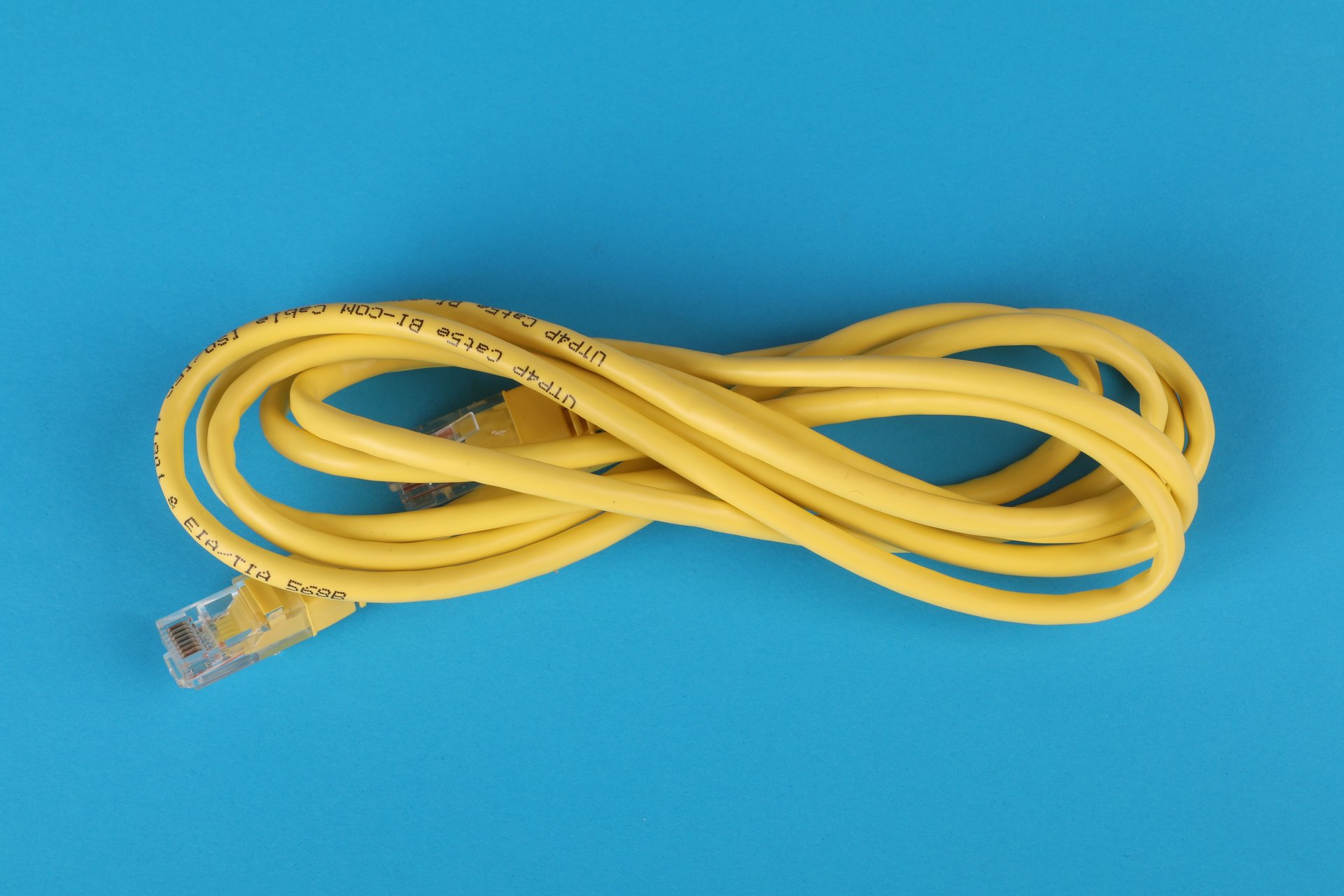
PoE cabling in a CCTV project is not “drop Cat5e and plug in”. There is maximum distance, there is voltage drop, there are standards that are met or not, and there are common errors that cost hours of troubleshooting. This is the guide that applies to retail stores.
( spoiler: 100 meters is the theoretical maximum. In practice, with PoE+ and a PTZ camera with heater, 80 meters is where you start having problems )
The three standards that matter
IEEE 802.3af (PoE) — 2003
- 15.4 W per port (12.95 W available to the device)
- 2 pairs (mode A or mode B)
- Sufficient for basic fixed IP camera (typical 5-8 W)
IEEE 802.3at (PoE+) — 2009
- 30 W per port (25.5 W available)
- 2 pairs
- Required for PTZ, strong IR, heater, dome with fan
- The de facto standard in 2026 for retail [IEEE 802.3at]
IEEE 802.3bt (PoE++ / 4PPoE) — 2018
- 60 W (Type 3) or 90 W (Type 4) per port
- 4 pairs (all pairs carry current)
- For high-power PTZ, LED illumination, signage displays
- Still minority in retail 2026; rising to 15-20% share by 2027 [IEEE 802.3bt]
Maximum distance by cable
100 meters is the theoretical maximum distance for Ethernet over copper (Cat5e/Cat6/Cat6A), independent of the PoE standard. It comes from the IEEE 802.3 Ethernet standard and holds in PoE/PoE+/PoE++ [Cisco PoE guidelines].
What changes with PoE+ and PoE++ is voltage drop. A typical PoE+ camera needs 25.5 W. If your cable is Cat5e 100 m 24 AWG, the loop resistance is ~0.188 Ω/m × 100 m × 2 (round trip) = 37.6 Ω. At 25.5 W with 48V supply, that is a drop of ~2 V. The camera receives 46 V instead of 48 V, which is within range (valid range: 37-57V).
But with Cat5e 100 m + PoE++ of 60 W + 24 AWG cable, the drop rises to ~4 V. The camera receives 44 V, still OK. With 26 AWG cable (cheap cables), the resistance rises 40% and the drop reaches 5.5 V. The camera receives 42.5 V, still in range, but with little margin for consumption spikes (heater turning on, IR activating).
When fiber instead of copper
You need fiber when:
- Distance >100 m between switch and camera (external parking lots, CEDIS perimeter, multi-building campus)
- Noisy electrical environment (near motors, drives, high-voltage lines) — fiber is immune to EMI
- Ground isolation between buildings (protection against ground potential differences that damage switches)
- Future-proofing for 10G uplink between buildings (Cat6A copper supports 10G up to 100 m; Cat6 up to 55 m; Cat5e up to 45 m with PoE limitation)
Copper-to-fiber media converters cost ~$50-100 USD per pair. For a typical retail store with distances <100 m, you do not need fiber. For a CEDIS with 400 m perimeter, yes.
Real limitations by camera category
Fixed 4K IP camera (8-12 W consumption):
- 802.3af PoE sufficient
- Cat5e 100 m no problem
- No special considerations
PTZ camera with IR (25-30 W consumption):
- 802.3at PoE+ mandatory
- Cat5e/Cat6 100 m works, Cat5e 26 AWG problematic at 80+ m
- Cat6 23 AWG recommended for margin
PTZ camera with heater (-30°C operation, 60 W):
- 802.3bt Type 3 PoE++ needed
- Cat6 23 AWG mandatory, Cat6A preferred
- At 100 m you need to verify specific voltage drop with your media converter
Multidirectional / multisensor camera (30-45 W):
- Typically PoE+ or PoE++ depending on manufacturer
- Check the datasheet — some models declare PoE+ but real consumption is 28 W with heater, others declare 60 W but are PoE++
Common installation errors
Error 1: Using Cat5e 26 AWG instead of 23/24 AWG The conductor gauge matters. “Cheap” white-label cables use 26 AWG (thinner, more resistance). At 100 m with PoE+, the camera may not power on or reset randomly. Solution: buy cables from recognized manufacturers (Panduit, CommScope, Teldor, Belden) that use nominal 23 AWG.
Error 2: Badly crimped RJ45 connectors 80% of PoE link failures in the field are badly crimped connectors. A pin that does not make proper contact = the camera does not negotiate PoE. Solution: use impact crimpers (not jaw type), check continuity with a tester, and even better: use toolless connectors like Panduit Keystone.
Error 3: Running UTP cable parallel to power cables Unshielded UTP picks up EMI when running parallel to power cables >3V/A. The Ethernet signal degrades, especially at 100 m. Solution: cross at 90°, keep 30 cm separation, or use STP/FTP shielded. For retail where UTP runs through the ceiling alongside electrical conduits, STP/FTP is practically mandatory.
Error 4: Not considering ambient temperature UTP cables have a nominal temperature range (typically 0-60°C for PVC, -20 to +75°C for LSZH). If they run through a metal roof exposed to sun in a warm zone (northern Mexico, outdoor retail), the conduit internal temperature exceeds 60°C in summer. PVC softens, insulation degrades, in 2-3 years you have insulation failure. Solution: cable with -40 to +75°C range or PE (polyethylene) for outdoor runs.
Error 5: Confusing “active PoE” with “passive PoE” There are “passive” PoE injectors that apply 48V without negotiating (managed PoE switches do negotiate with the device). If you use a passive injector on a camera that requires 802.3at, you may damage the camera or shorten its lifespan. For retail projects with >5 cameras, use managed PoE switches (Cisco, Ubiquiti, TP-Link Omada, Mikrotik) — passive injectors are for <3 cameras in domestic environments.
Recommended PoE switches by scale
<8 cameras: Unmanaged switch TP-Link TL-SG108PE (8 PoE+ ports) or Ubiquiti USW-Lite-8-PoE. ~$80-120 USD.
8-24 cameras: Managed switch Ubiquiti USW-24-PoE or TP-Link TL-SG1428PE (24 PoE+ ports). ~$300-600 USD. Includes VLAN, QoS, SNMP for monitoring.
24-48 cameras: Stack of managed switches with total PoE budget of 400-800 W. Cisco Catalyst 1300, HPE Aruba Instant On 1960, Ubiquiti USW-48-PoE. ~$1,500-3,000 USD.
>48 cameras: Core switches with fiber modules + PoE+ access switches. Segmented network design with VLAN for video, VLAN for access point, VLAN for POS. Requires professional design.
Executive summary
For a retail store with <16 IP cameras within 100 m: PoE+ 802.3at with 24-port managed switch, Cat6 23 AWG LSZH cable, correctly crimped connectors. ~$1,500-2,500 USD in cabling/switch infrastructure.
For a CEDIS with 50+ cameras and distances up to 150 m: PoE+ copper + fiber mix with media converters on long distances. Core switch with 1G fiber uplinks. ~$8,000-15,000 USD on infrastructure.
P.D. Does your UTP cable have the gauge marked on the jacket? If it says “26 AWG”, replace it with Cat6 23 AWG before the next camera that resets itself at 3 AM.
Sources
[1] IEEE 802.3at-2009 PoE+ standard — https://standards.ieee.org/ieee/802.3at/4538/ [2] IEEE 802.3bt-2018 PoE++ (4PPoE) standard — https://standards.ieee.org/ieee/802.3bt/7072/ [3] Cisco — PoE power budget and cable length guidelines — https://www.cisco.com/c/en/us/solutions/enterprise-networks/power-over-ethernet-poe/index.html [4] Panduit — PoE cabling best practices for CCTV — https://www.panduit.com/en/solutions/poe-cabling.html [5] CommScope — PoE distance limitations and extenders — https://www.commscope.com/globalassets/digizuite/557755-poe-distance-limitations.pdf [6] Black Box — PoE calculator and cable distance tool — https://www.blackbox.com/en-us/black-box/poe-calculator [7] Teldor — Power over Ethernet cable specification — https://www.teldor.com/c/poe-cables