The EU’s Entry/Exit System (EES) was declared operational on April 10, 2026. It has not worked properly since.
The system was supposed to replace passport stamps for 29 European countries and register each non-EU visitor’s name, travel-document data, fingerprints, and facial image EU Commission EES page. To date: 200 million registrations, 70,000 people stopped at the border — more than double the June figure (43,700) The Guardian, 14-Sep-2026.
The grace period that let countries suspend biometric collection at peak traffic expired on September 6. The Commission publicly said it would not be extended. On September 14, with no new legal act, 9 countries (France, Germany, Italy, Belgium, the Netherlands, Greece, Malta, Portugal, and Switzerland) received informal approval to suspend collection “to maintain border fluidity” Biometric Update, 14-Sep-2026.
The public reason: software errors that prevent correct transmission of biometric data. In France, the pre-registration kiosks are the responsibility of the state and its contractor Thales, and the links to the central PARAFE system fail intermittently Connexion France, 14-Sep-2026. Ryanair, IATA, ACI, and Airlines for Europe had warned that removing the flexibility would create chaos.
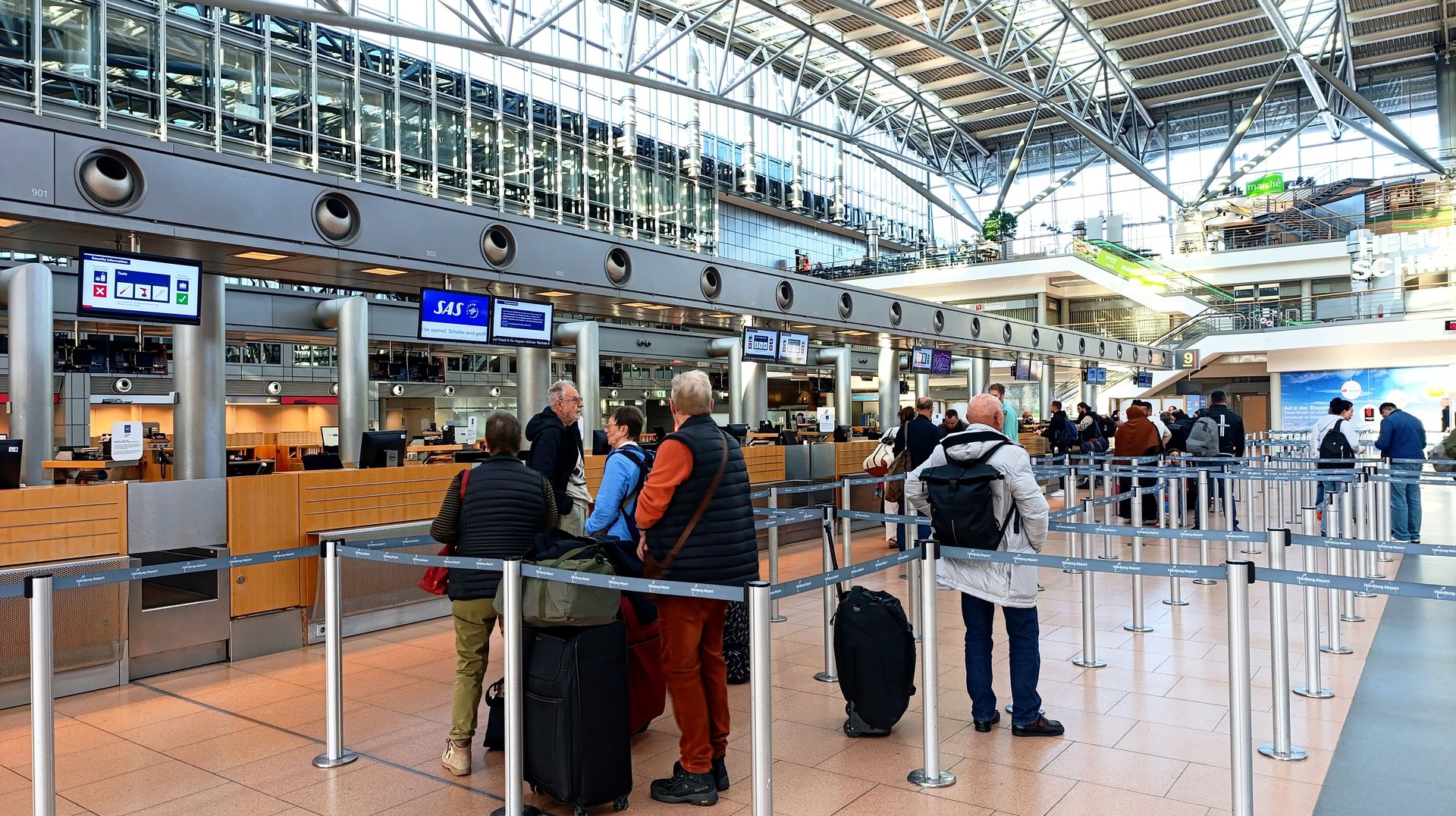
Of 1,500 Schengen border crossing points, only 12 airports were still having problems as of Sep 14 — but those 12 include Frankfurt and Schiphol, two of Europe’s biggest international hubs The Guardian, 14-Sep-2026.
The question for any LATAM procurement officer: if the EU — with eu-LISA, Amazon S3, Azure, Microsoft as central-cloud provider, five years of phased rollout, and a regulatory framework designed for biometrics at scale — cannot run the system at peak hours in its biggest airports, what probability does your project have of identifying 30 million voters (Mexico’s INE), 50 million taxpayers (Mexico’s SAT), or the migration registry (Banjercito) inside a single electoral or fiscal window?
And the operational question: if the EU’s answer was an informal country-by-country derogation, with no new legal act and no new deadline — is that same answer already written into your procurement plan, or will you discover it on deployment day?
P.D. Does your current biometric RFP ask the vendor for a documented procedure when the central system fails at peak hours? If the answer is “no,” today is a good day to add that line before signature.
📰 Source: Biometric Update (14-Sep-2026) + The Guardian (14-Sep-2026) + The Times (14-Sep-2026) + Connexion France (14-Sep-2026) + EU Commission EES page (accessed 19-Sep-2026).
Sources
[1] Biometric Update Sep 14 2026 — EU lets 9 Schengen countries delay full EES biometric checks — https://www.biometricupdate.com/202609/eu-lets-9-schengen-countries-delay-full-ees-biometric-checks [2] The Guardian Sep 14 2026 — Nine EU countries further delay EES border checks — https://www.theguardian.com/world/2026/sep/14/eu-countries-delay-ees-entry-exit-system-border-checks-france-greece-portugal-italy [3] The Times Sep 14 2026 — EES entry/exit system: nine countries drop checks amid fears of queues — https://www.thetimes.com/travel/advice/border-checks-eu-ees-entry-exit-system-news-8grrwsgk9 [4] Connexion France Sep 14 2026 — France among countries delaying full EES biometric border checks — https://www.connexionfrance.com/news/france-listed-among-countries-to-delay-full-ees-border-check-rollout/814138 [5] EU Commission — Entry/Exit System (EES) page — https://home-affairs.ec.europa.eu/policies/schengen/smart-borders/entry-exit-system_en