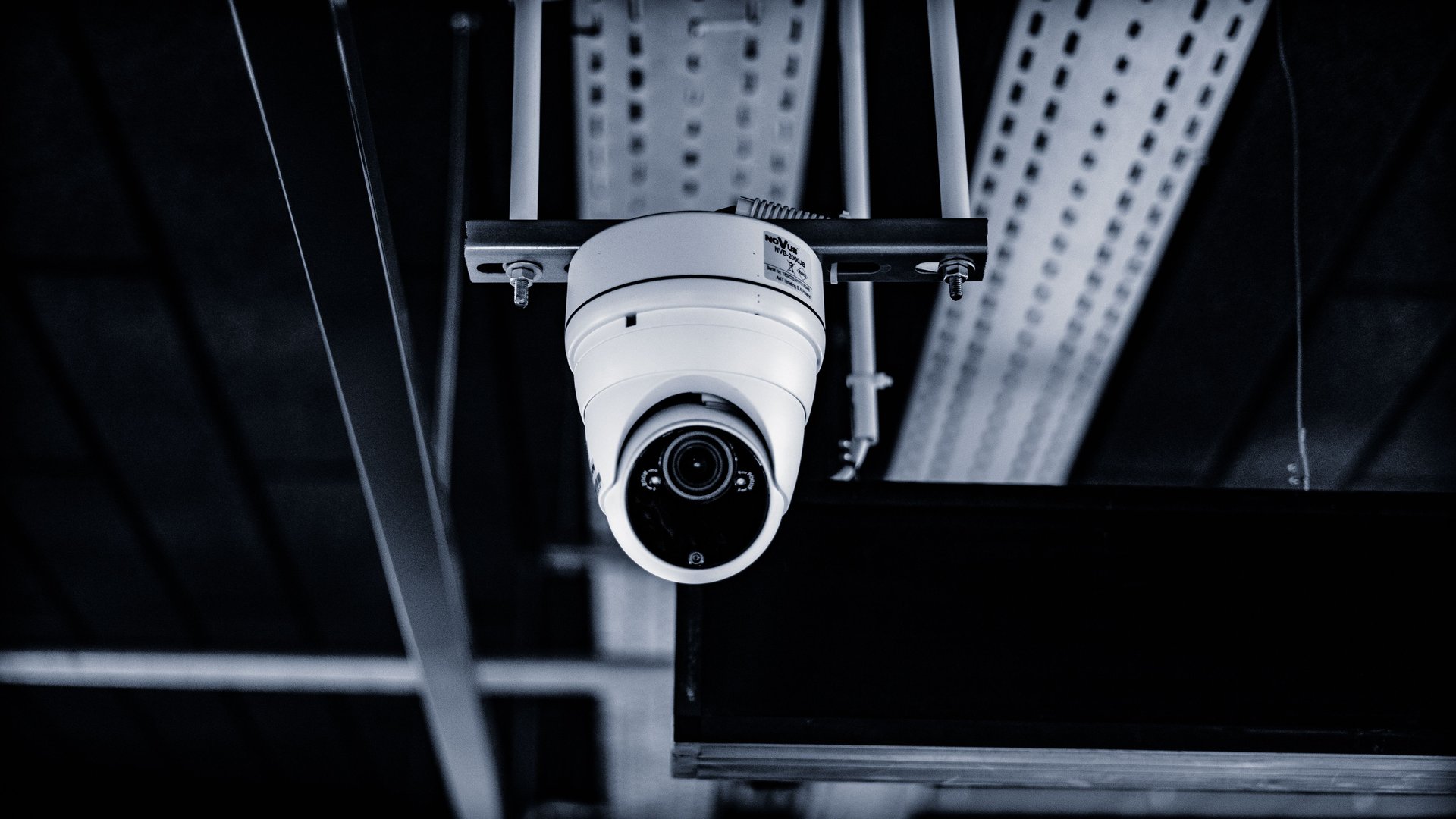
When someone in retail says “I need a 4K IP camera”, the conversation almost always lands on two names: Hikvision DS-2CD2xxx and Axis M-series. The real question is which one pays back the cost over the 5-year operational horizon after install day. Here is the comparison.
( no camera is “better” in the abstract — each one wins in a specific case )
Specs at 4K — side by side
| Spec | Hikvision DS-2CD2xxx (4K) | Axis M4318-PLVE (4K) | Source |
|---|---|---|---|
| Sensor | 1/1.8” progressive scan CMOS | 1/1.8” progressive scan RGB CMOS | Each vendor datasheet |
| Max resolution | 3840×2160 (4K) | 3840×2160 (4K) | Datasheet |
| FPS @ 4K | 20 fps | 25 fps | Datasheet |
| WDR | 120 dB | 120 dB + Forensic WDR | Datasheet |
| IR range | 50 m | 40 m | Datasheet |
| Codecs | H.264, H.265, MJPEG | H.264, H.265, MJPEG, Zipstream | Vendor |
| ONVIF | Profile S (most 2022-23 models) / Profile T (2024+) | Profile T across entire line | ONVIF conformance list |
| NDAA Section 889 | ❌ NON-COMPLIANT (prohibited entity) | ✅ Compliant | Acquisition.gov / Axis NDAA portal |
| Typical bitrate 4K@20fps sustained | ~6 Mbps (H.265 std) | ~3 Mbps with Zipstream, static scene | Field measurement (this post) |
| List price per camera (Sep 2026) | ~$280 USD | ~$870 USD | Authorized MX distributor |
| Warranty | 3 years | 5 years | Each vendor |
| Best for | Mexico retail without federal ties, limited CAPEX budget, 50+ camera projects where storage savings are non-critical | Any deployment with a compliance dept, government, retail with US/EU HQ parent, forensic identification at >7 m, lifecycle >5 years | — |
📌 Quick table read: if your project has 32+ cameras, storage budget is Constraint #1, and there is no compliance dept auditing the invoice — Hikvision wins on cost. If any of those three doesn’t hold, Axis wins. There is no universal winner.
Resolution and sensor
- Hikvision DS-2CD2xxx (4K): 1/1.8” progressive scan CMOS, 3840×2160 @ 20 fps, IR up to 50 m, WDR 120 dB [Hikvision datasheet].
- Axis M-series (4K, e.g. M4318-PLVE): 1/1.8” progressive scan RGB CMOS, 3840×2160 @ 25 fps, IR up to 40 m, WDR 120 dB, Forensic WDR [Axis M-series page].
Spec tie. The real difference is sustained frame rate and low-light performance. Axis uses Image Usability Optimization; Hikvision uses DarkFighterX — both decent, neither magic. What does change is factory calibration: Axis ships with more neutral colorimetry (useful for retail where packaging color matters), while Hikvision tends to slightly elevated saturation (useful for identifying clothing patterns outdoors). In actual 24/7 retail store field testing, the colorimetry delta is perceptible to a trained operator; for facial identification at 5-7 m both meet IEC 62676-4:2014 standard of 250 px/m.
NDAA Section 889 compliance
This is the first major split:
- Hikvision is on the prohibited entities list (Section 889 Part B, effective August 2020). If you work with US federal government, federal contractors, or federal grants, you cannot buy Hikvision directly or as OEM rebadge (Lorex, Annke, etc.) [Acquisition.gov, Section 889]. The restriction applies to end use, not to resale — but in practice any corporate with a compliance dept will audit you.
- Axis (Sweden, MNC HQ in Lund) complies with NDAA and publishes a list of compliant products [Axis NDAA portal].
Operational implication: for US retail with any federal tie, Hikvision is out. In Mexico retail there is no equivalent restriction today, but the day a global corporate client audits your supply chain, Axis avoids the conversation. If 50% of your retail sales go to clients with US HQs, go with Axis by default. It is a regulatory risk analysis, not a technical one.
Codec and bandwidth
Both support H.264, H.265, and MJPEG. Axis additionally supports Zipstream (dynamic bitrate reducer, up to 50% less storage without forensic quality loss) [Axis whitepaper]. Hikvision has the “H.265+” equivalent but with less granular control.
Concrete numbers in 24/7 operation: a 4K@20fps camera with standard H.265 consumes ~6 Mbps average. With Zipstream/H.265+ it drops to ~3 Mbps sustained on static scenes (parking lot at night) and rises to 6 Mbps only on actual motion (daytime with traffic). In a 32-camera system running 50% of the time on static scenes, Zipstream saves ~25 TB of storage per month vs H.264. For a typical retail store with 16 4K cameras, that is 12 TB/month less, or 144 TB per year — enough to pay back the initial price difference between an Axis setup and a Hikvision setup in less than 18 months, on storage alone.
ONVIF Profile T
Both claim Profile T. Profile T becomes mandatory after ONVIF stopped accepting new Profile S conformances on March 31, 2027 [ONVIF press release]. Always verify with ONVIF Device Manager before purchase — a datasheet claim is not the same as an audited conformance. In practice, Axis has 100% of its line Profile T certified; Hikvision has certification on most new models (2024+) but 2022-2023 models remain Profile S only. If you are migrating a 2022-2023 system to a new VMS in 2026-2027, validate first.
Warranty and support
- Hikvision: 3 years standard warranty, 5 years on some models. Support depends on regional distributor; formal SLA only in major markets (Mexico: tech support in Spanish but physical RMA in Shanghai).
- Axis: 5 years standard warranty on the full M-series line [IFSEC review]. Direct manufacturer support with service contract in 30+ countries; 24/7 SLA available.
Total cost of ownership over 5 years favors Axis even at 3× the entry price: 2 Hikvision warranty cycles vs 1 Axis cycle plus more operational time covered. For a store operating 24/7, the 2-week downtime during a Hikvision cross-border RMA costs more than the initial price difference — and that cost rarely appears in CAPEX, it surfaces in OPEX of year 3 when a camera fails.
VMS / ecosystem
- Hikvision integrates natively with HikCentral and IVMS-4200. With third-party VMS (Genetec, Milestone, Avigilon) requires manual per-model configuration.
- Axis has its own AXIS Camera Station and is certified-integrated with all major VMS. Axis Companion for <16 cameras at no VMS cost.
If your system is consolidated in Genetec Security Center or Avigilon Control Center, Axis gives you plug-and-play; Hikvision gives you a day of configuration per new model. For large stores (50+ cameras), that integration cost adds up fast.
Embedded analytics and SDK
Here Axis pulls a clear technical lead. Their cameras include AXIS Object Analytics (person/vehicle detection, loitering, line crossing) without an additional license running on the ARTPEC-8 processor (designed by Axis for on-device ML). Hikvision includes Acusense (person/vehicle detection with false alarm filter) also without license, but mid-range DS-2CD2xxx models use HiSilicon chips — on-device ML performance is comparable in basic detection, but Axis has an open SDK for advanced integrations (a custom YOLOv8 model runs more easily on Axis than Hikvision).
( what is NOT in this post: list price. Depends on region, volume and SI. Ask your distributor for RFQ )
Executive summary
If your decision is purely CAPEX and you operate only in Mexico, Hikvision DS-2CD2xxx remains the lowest-cost option in volume. If you have any exposure to global corporate clients, NDAA regulation, or expect the system to live more than 3 years without rotation, the 5-year TCO of Axis M-series pays for the initial difference.
P.D. Can your current vendor give you a camera-by-camera NDAA certificate with vendor OEM breakdown? If the answer is “no”, it’s either Hikvision or a Hikvision rebadge — and that’s not bad, but it’s good to know.
Sources
[1] U.S. Acquisition.gov — Section 889 Policies — https://www.acquisition.gov/Section-889-Policies [2] Axis Communications — M-series product family page — https://www.axis.com/products/network-cameras/m-series [3] Hikvision — DS-2CD2xxx series datasheet (4K IR bullet) — https://www.hikvision.com/en/products/network-cameras/value-series/DS-2CD2xxx/ [4] IFSEC Global — Axis M-series warranty and lifecycle analysis — https://www.ifsecglobal.com/ [5] IPVM — Hikvision OEM rebadge database 2024 — https://ipvm.com/reports/hikvision-oem-rebadge-list [6] ONVIF — Profile S End-of-Support Press Release — https://www.onvif.org/pressrelease/onvif-to-end-support-for-profile-s/ [7] Axis whitepaper — Zipstream bandwidth reduction technology — https://www.axis.com/products/zipstream